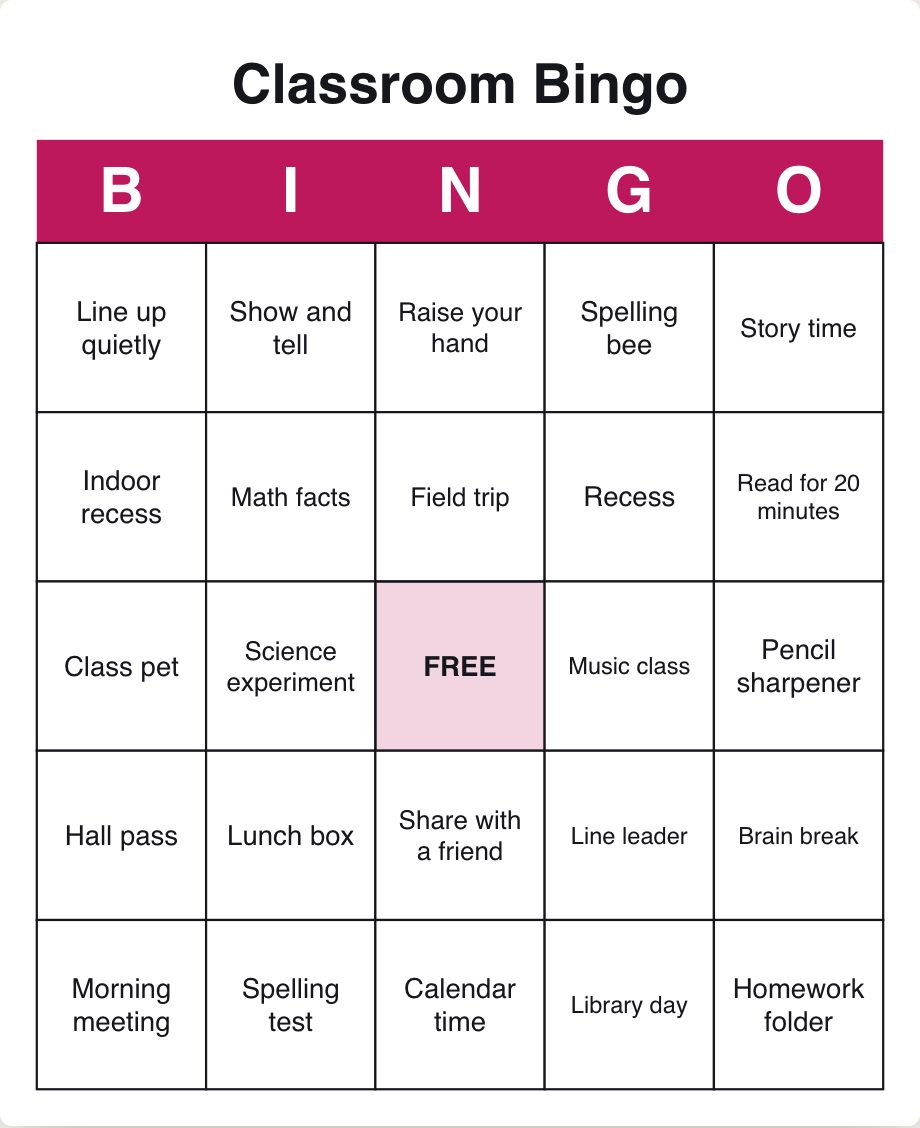
How to make bingo cards in four steps
- Choose a card type. Words & phrases uses your own list, which suits parties, classrooms, baby showers and team events. Numbers 1–75 makes traditional cards.
- Add your items. Paste a list with one item per line. The counter turns green once you have enough for a full card (24 with a free space, 25 without).
- Set how many cards you need. Make one per player, plus a couple of spares. You can make up to 100 different cards in one download.
- Download or print. The PDF contains your cards and, if you leave it switched on, a caller sheet at the end.
Use the arrows under the preview to flip through the set before you print. Press Shuffle to rearrange every card at once while keeping your list and settings.
How many items should your list have?
The number of items decides how different the cards look from each other:
| Items in your list | What players notice |
|---|---|
| 24–25 | Every card has the same items, just arranged differently. Games often end with several winners at once. |
| 30–40 | Cards share most items but each is missing a few. A good balance for small groups. |
| 45–75 | Cards look clearly different, and games last longer. Best for groups of 20 or more. |
With a short list everyone marks almost every call, so lines fill up together. With a long list, each call helps only some players, which spreads out the wins. For a quick party round, 30 items is plenty. For a full classroom, aim for 40 or more.
Writing a good bingo list
- Keep items short. One to three words per square reads well from arm’s length. Long phrases are shrunk to fit, but shorter items are easier to spot quickly.
- Make every item callable. The caller has to read each item aloud or show it, so avoid items that are hard to describe in a few seconds.
- Avoid near-duplicates. “Cake” and “Birthday cake” on the same list cause arguments. Pick one.
- Use the game to teach. In a classroom, the caller can read a definition and students mark the matching word. That turns bingo into vocabulary review without changing the cards.
Running the game
- Give each player a card and something to mark squares with: a pencil, a stamp, or small counters if you want to reuse the cards.
- The caller reads items from the caller sheet in order and ticks each one off.
- Decide the winning pattern before you start: one row, column or diagonal; four corners; or a full card (“blackout”) for a longer game.
- When someone calls “Bingo!”, check their marked items against the ticked items on the caller sheet.
Tip: The card number is printed in the corner of each card. If you’re running several rounds, collect cards between games and redistribute them so nobody keeps a lucky card.
Printing tips
- Print at actual size. In your printer dialog choose Actual size or 100% rather than Fit to page. The layout already leaves safe margins on Letter and A4.
- Card stock lasts longer. If you plan to reuse cards with counters, printing on heavier paper stops them curling.
- Two per page for big groups. It halves the paper you need. Cut along the dashed line in the middle.
- Laminate for reuse. Laminated cards work with dry-erase markers, so one set lasts a whole year of classroom games.
Number bingo, explained
Traditional 75-ball bingo uses five columns, each with its own range: B 1–15, I 16–30, N 31–45, G 46–60 and O 61–75. Each column on a card holds five numbers from its range (four in the N column when there’s a free space), sorted from smallest to largest. The caller sheet lists all 75 numbers in random order with their column letter, for example G-52, so players know which column to check.
Ready-made themes
Short on ideas? Start from one of our themed lists and edit it however you like: baby shower bingo, Christmas bingo, classroom vocabulary bingo and more below. For more game ideas, read bingo games for parties and events.
Bingo themes
- Baby Shower Bingo40 ready-made squares
- Birthday Party Bingo40 ready-made squares
- Bridal Shower Bingo40 ready-made squares
- Christmas Bingo40 ready-made squares
- Classroom Vocabulary Bingo40 ready-made squares
- Halloween Bingo40 ready-made squares
- New Year Bingo40 ready-made squares
- Road Trip Bingo40 ready-made squares
- Sight Words Bingo45 ready-made squares
- Winter Bingo40 ready-made squares